
Lake Worth Beach Concrete Patio: Costs, Designs & Installation Guide
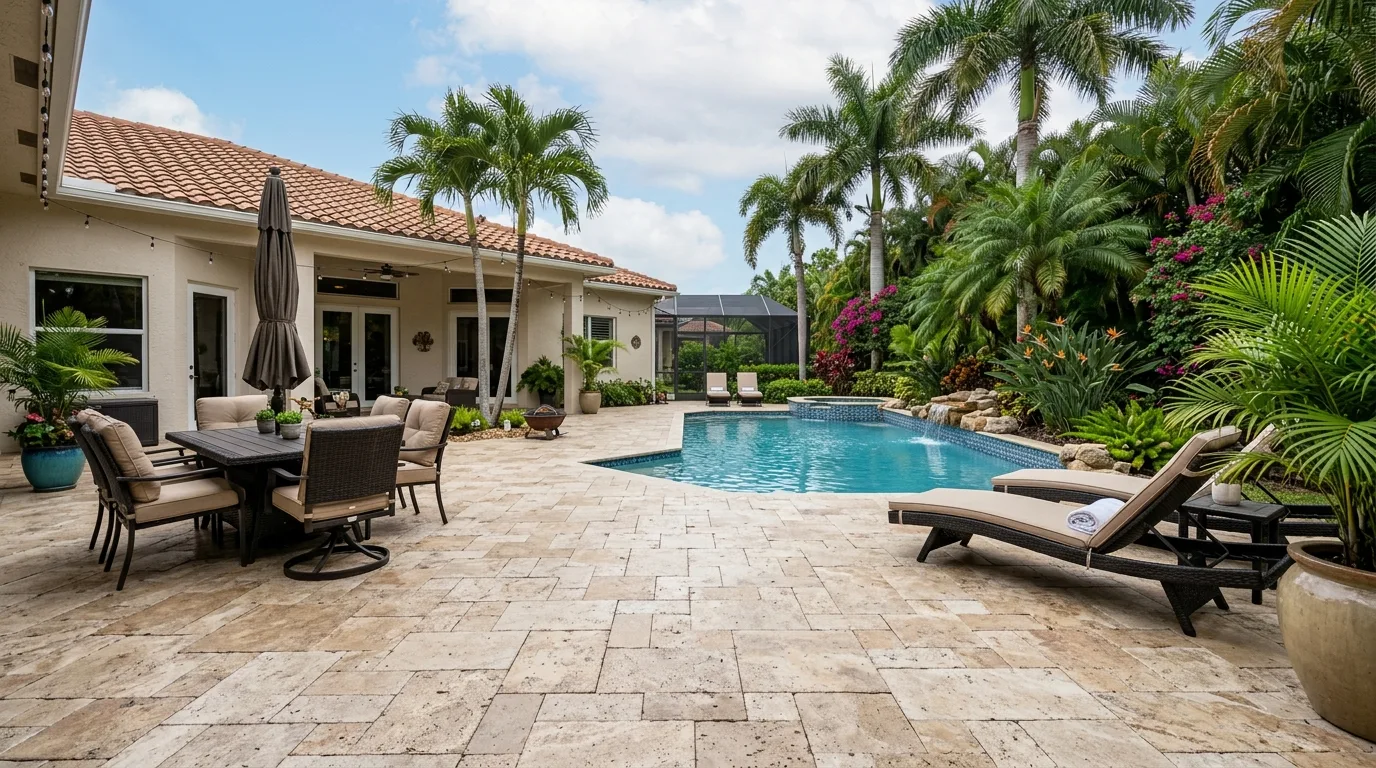
Ask a real estate agent in Lake Worth Beach what home improvements add the most livable value, and a concrete patio consistently ranks at the top — primarily because South Florida’s climate makes outdoor living genuinely useful for 10–11 months per year. A well-designed patio in South Palm Park or the Mango Groves neighborhood effectively expands usable square footage without the complexity and permitting burden of an enclosed addition. This guide covers everything Lake Worth Beach homeowners need to know about concrete patio installation: design options, 2026 costs, drainage requirements, and the permit process through the City of Lake Worth Beach.
Design Your Lake Worth Beach Concrete Patio
Free estimates with drainage design consultation. Call (888) 376-0955.
Why Concrete Is the Best Patio Material in Lake Worth Beach
Concrete outperforms pavers and wood decking for patio use in Lake Worth Beach for straightforward reasons. Pavers shift over time in Palm Beach County’s expansive clay soils — the same seasonal moisture cycling that affects concrete affects pavers even more, since individual units are free to move independently. Wood decking rots, warps, and requires painting or staining maintenance that doesn’t hold up well in South Florida’s humidity and sun exposure.
Concrete is monolithic — once installed correctly with proper drainage design and reinforcement, it stays where it’s placed. Stamped or decorative concrete surfaces resist mold and algae better than paver joints, which trap organic material in South Florida’s humid climate. And concrete can be resurfaced — when a patio’s surface shows wear after 10–15 years, a decorative overlay restores its appearance without full demolition.
Concrete Patio Design Options in Lake Worth Beach
Plain broom-finish concrete: The most cost-effective option at $6–$9 per square foot. Works well as a functional patio base that can always be overlaid with stamped or decorative finish later. Most homes throughout Lake Worth Beach have this finish on existing patios.
Exposed aggregate: A decorative option where the surface layer is washed away to reveal the natural aggregate. Creates a textured, natural-looking surface that holds up well in South Florida’s heat and provides good slip resistance when wet. Costs $10–$16 per square foot.
Stamped concrete: The premium option, replicating stone, brick, or slate patterns with color. Most popular for entertaining-focused patios in South Palm Park, Parrot Cove, and Sunset Ridge where the outdoor space is the main feature of the backyard. Costs $12–$18 per square foot and requires resealing every 2–3 years in Palm Beach County’s UV environment.
Decorative overlay on existing slab: If your current patio slab is structurally sound but plain or faded, an overlay system applies a new decorative finish over it. Costs $8–$14 per square foot without the demo cost of full replacement.
Concrete Patio Sizes and Costs for Lake Worth Beach Homes
- Small patio (150–200 sq ft): $900–$1,800 plain, $1,800–$3,600 stamped. Good for apartment conversions and smaller lots in the Old Lucerne neighborhood.
- Standard patio (300–400 sq ft): $1,800–$3,600 plain, $3,600–$7,200 stamped. The most common patio size throughout Lake Worth Beach’s single-family neighborhoods.
- Large entertaining patio (500–800 sq ft): $3,000–$7,200 plain, $6,000–$14,400 stamped. For homeowners treating their backyard as an outdoor living room — common in properties near Bryant Park.
- Permit fee: Add $150–$400 for patios over 120 square feet.
These Lake Worth Beach cost ranges reflect 2026 pricing in Palm Beach County’s labor and material market.
Drainage: The Most Critical Design Element for Lake Worth Beach Patios
Drainage is the factor most often cut by contractors who don’t understand Lake Worth Beach’s rainfall environment. Palm Beach County’s June–September rainy season delivers daily afternoon thunderstorms — a concrete patio that doesn’t drain properly during this period becomes a persistent water collection point. Standing water near the home’s foundation is the root cause of most foundation movement complaints in Lake Worth Beach’s inland neighborhoods.
The minimum drainage slope for outdoor concrete in Lake Worth Beach is 1/8 inch per foot away from the home. On a 20-foot-deep patio, that means a 2.5-inch elevation difference from the house wall to the outer edge — subtle enough to be invisible but significant enough to prevent ponding. In areas with heavy clay soils (Sunset Ridge, College Park), French drains or catch basins alongside the patio perimeter provide additional protection.
Practical Uses for Concrete Patios in Lake Worth Beach
- Outdoor dining and entertaining: A 300–400 square foot stamped patio off the kitchen or family room in Mango Groves creates a true outdoor dining space usable almost year-round.
- Connecting the home to a pool: A concrete patio surrounding the pool deck creates a cohesive outdoor space without the grout-line maintenance of pavers.
- Ground-level deck replacement: Many Lake Worth Beach homes have aging wood decks that rot and require expensive maintenance. Concrete patio replacement eliminates annual maintenance while increasing the surface’s longevity to 25–40 years.
- Side yards and utility areas: Concrete side yard pads in College Park and Old Lucerne create low-maintenance surfaces for trash bins, HVAC equipment, and utility access.
- Grill and outdoor kitchen base: A 10×12 concrete slab provides a stable, fire-safe base for outdoor kitchens — particularly popular in properties along the Intracoastal Waterway.
Frequently Asked Questions
Do I need a permit for a concrete patio in Lake Worth Beach?
Patios over 120 square feet require a permit from the City of Lake Worth Beach Building Division, with fees running $150–$400. Patios under 120 square feet are generally exempt. Decorative overlays on existing permitted slabs do not typically require new permits. We handle permit applications and inspections on your behalf. See our full Lake Worth Beach concrete permit guide for details.
How long does a concrete patio last in Lake Worth Beach?
A properly installed and sealed concrete patio in Lake Worth Beach lasts 25–40 years. The key maintenance steps are sealing every 2–3 years (critical in South Florida’s UV environment) and addressing cracks promptly before water infiltration enlarges them. Drainage design at installation is the biggest determinant of long-term structural integrity — patios that shed water properly outlast those with drainage problems by decades.
Can I add a concrete patio without HOA approval in Lake Worth Beach?
Lake Worth Beach has a mix of HOA-governed and non-HOA neighborhoods. In HOA communities, exterior improvements typically require Architectural Review Board (ARB) approval before permit application. We can provide material specifications and design drawings to support ARB submissions. Confirm your HOA requirements before starting the permit process.
Build Your Lake Worth Beach Outdoor Living Space
Free estimates with drainage design included. Serving all of Palm Beach County. Call (888) 376-0955.
Related: