
Best Time to Pour Concrete in Palm Beach County: Seasonal Guide
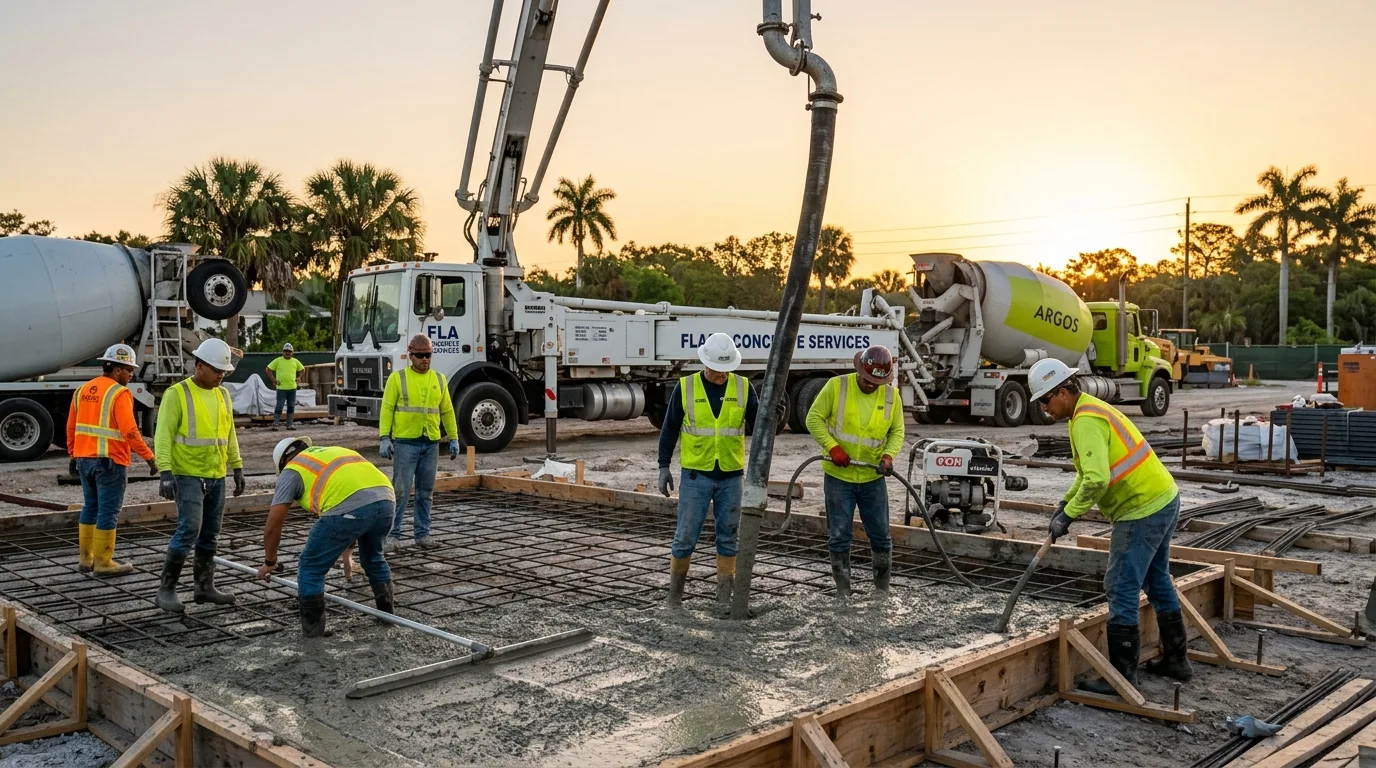
November is when homeowners throughout Lake Worth Beach start calling concrete contractors — and there’s a reason for it. The shift from South Florida’s rainy season to the dry season brings conditions that make concrete installation noticeably more straightforward, more predictable, and less expensive to execute correctly. Understanding the seasonal rhythm of Palm Beach County’s weather isn’t just academic — it directly affects scheduling decisions, project timelines, and the quality of the finished concrete.
Schedule Your Lake Worth Beach Concrete Project
Dry season availability fills fast. Call (888) 376-0955 to get on the schedule.
Why Seasonality Matters More in Palm Beach County Than Most Markets
Concrete is temperature- and humidity-sensitive during the placement, finishing, and curing windows. In most of the country, the concern is cold weather slowing hydration. In Lake Worth Beach and the rest of Palm Beach County, the concern is the opposite: excessive heat and humidity that accelerate moisture loss, compress the finishing window, and can prevent proper curing if not actively managed.
Palm Beach County averages 62 inches of rain per year, with the vast majority falling between June and September. June averages 6 inches of rain across approximately 21 rainy days — meaning that during summer, scheduling a multi-day concrete project without encountering a rain delay is genuinely difficult. Rain on fresh concrete before it has sufficiently hardened causes surface damage that ranges from cosmetic pitting to structural weakening.
Month-by-Month Concrete Scheduling in Lake Worth Beach
November – February (Peak Season): Average highs of 74–80°F, low humidity, virtually no rain, and consecutive dry days make this the best window for concrete work throughout Palm Beach County. Projects in College Park, Sunset Ridge, Mango Groves, and other Lake Worth Beach neighborhoods proceed with the most straightforward scheduling during these months. Curing is predictable, finishing windows are generous, and the lack of afternoon thunderstorms eliminates the primary weather risk.
The tradeoff: high demand. Contractors in Lake Worth Beach and West Palm Beach are heavily booked November through February. Projects planned for this window should be scheduled 4–8 weeks in advance.
March – May (Good Season): Still excellent conditions. March and April offer near-perfect temperatures (80–84°F) with low humidity and infrequent rain. May begins to transition — humidity rises and the first scattered afternoon storms appear, but projects remain manageable with early-morning scheduling. This window is a good option for homeowners who couldn’t get a November–February slot.
June – August (Rainy Season): June through August bring the most challenging concrete conditions in Lake Worth Beach. Daily high temperatures reach 87–90°F with humidity above 75% throughout the day. Afternoon thunderstorms arrive daily, often with little warning. The concrete finishing window — the time between placement and when the surface becomes too stiff to work — shortens significantly in these conditions.
Concrete work continues year-round in Palm Beach County, including during the rainy season. What changes is the execution requirements: early-morning pours (6–8 AM start), evaporation retarder sprays, active curing with wet burlap or blankets, and weather monitoring that may delay a pour by a day if storms are forecast. These precautions add time and cost but produce results that are equivalent to dry-season work when done correctly.
September – October (Transition Season): Hurricane season peaks in September and extends through October. While direct storm impacts are unpredictable, the statistical risk of weather delays is highest in September. October transitions into drier conditions and is a reasonable scheduling window for smaller projects. By late October, Palm Beach County’s weather pattern shifts decidedly toward the dry season.
Practical Scheduling Advice for Lake Worth Beach Homeowners
- Stamped or decorative concrete: Schedule November–April if possible. Stamping requires the longest and most precise finishing window — conditions that summer heat compresses significantly in South Florida.
- Standard driveways and patios: Can be done year-round with an experienced contractor. Summer adds coordination requirements but doesn’t fundamentally change the outcome when managed correctly.
- Foundation work: The rainy season requires active dewatering during excavation. Schedule dry-season foundation pours when the excavation can hold without flooding risk.
- Pool deck resurfacing: Works well in the early dry season (October–November) so the refreshed surface is ready for peak spring and summer pool use.
- Concrete repair: Can be scheduled anytime. Cracks don’t wait for dry season and small repairs don’t have the same weather sensitivity as large pours.
How the Rainy Season Affects Concrete Curing in Lake Worth Beach
Concrete strength development depends on temperature and moisture over the first 28 days after placement. Lake Worth Beach’s summer heat accelerates early strength gain but also causes rapid moisture evaporation — if the concrete dries too fast in the first 24–72 hours, it loses the water needed for proper hydration and never reaches its design strength.
The solution is moist curing: keeping the surface damp with wet burlap, curing blankets, or curing compound for 7–14 days after placement. In winter months, this is less critical because ambient humidity keeps the surface from drying too fast. In summer, it’s mandatory for any project where full-strength concrete is required — especially driveways and foundations.
Frequently Asked Questions
Can concrete be poured in summer in Lake Worth Beach?
Yes — professional concrete work continues throughout summer in Lake Worth Beach and Palm Beach County. The difference is in execution: early-morning pours to maximize finishing time before afternoon heat, evaporation retarders, active curing management, and weather monitoring. With these precautions, summer concrete achieves the same quality as dry-season work. Without them, surface defects and strength issues are more likely.
How does hurricane season affect concrete scheduling in Lake Worth Beach?
Hurricane season (June 1–November 30) doesn’t prevent concrete work, but active storms or tropical systems approaching Palm Beach County will delay any project that requires a specific pour date. Contractors in Lake Worth Beach monitor forecasts closely and will reschedule pours if a system threatens. For major foundation projects where timing flexibility is important, scheduling outside peak hurricane season (June–September) reduces weather-related delay risk.
How long should I wait to use concrete after it’s poured in South Florida?
Plan for 7 days before vehicle traffic on a new concrete driveway in Lake Worth Beach — longer in summer if temperatures were very high during the cure. Foot traffic is typically permitted after 24–48 hours. Full design strength (typically 28-day strength) is when the concrete has fully cured for structural purposes. Stamped or decorative concrete may require additional waiting before applying the final sealer coat — typically 28–30 days.
Book Your Lake Worth Beach Concrete Project Before Dry Season Books Up
Call (888) 376-0955 to check dry season availability. We serve all of Palm Beach County.
Related: